
'The focus wîth Mark X was on pure, integrated design. Our holistic exterior and interior design approach instantly shows its rewards…'
- Marek Reichman, Chief Designer
• Mark X's sumptuous interior and integrated exterior design theme embody future Lincoln luxury.
• Mark X is Lincoln's first convertible wîth a power-folding, retractable, glass-roofed hard top.
The forward-lòòking design aspirations of Lincoln vehicles in the 21st century are expressed by the Mark X, Lincoln's first two-door convertible concept wîth a power-folding, retractable, glass-roofed hard top.
Mark X, pronounced 'Mark Ten,' is a two-seat luxury convertible roadster that blends design elegance wîth driving athleticism. The use of rich materials, varying textures and contrasting colors represents an evolution of the current Lincoln design philosophy.
Throughout its history, Lincoln has used the Mark name to signal a truly special vehicle. It began wîth Edsel Ford's first Continental, the Mark I. Next followed the 1956 Continental Mark II, which quickly became a classic because of its high quality, clean styling and consumate good taste.
The 1969 Mark III went on to sell more than 30,000 units, making it at the time, Lincoln's most successful new model ever. Other Mark vehicles were introduced in the 1970s, '80's and '90's.
The Mark X concept is designed to demonstrate the potential of the Lincoln brand by stretching its DNA to a sophisticated roadster. While a concept at this point, Mark X illustrates one possibility for expanding Lincoln into new luxury niches.
'The focus wîth Mark X was on pure, integrated design,' said Marek Reichman, chief designer. 'Our holistic exterior and interior design approach instantly shows its rewards, competing against the best personal luxury convertibles in the world.'
Based on the rear-wheel-drive Ford Thunderbird architecture, Mark X features a 3.9-liter, 4-valve DOHC V-8 aluminum engine mated to a five-speed automatic transmission delivering 280 horsepower and 286 foot-pounds of torque. Its athletic stance is accomplished through 19-inch, 12-spoke machined aluminum wheels wîth P245/40/R19 Michelin tires on the front and wider P275/35/R19 tires in the rear.
Clean Surface Design
Mark X's surface language is a model of precision engineering. Emphasis was placed on integrating design into the functional aspects of the car from the expansive grille to the innovative door handles to the sleek rear fascia. The result is an uncluttered exterior where essential details like the delicate contrast of Atlantic Pearl paint, chrome accents and well-placed Lincoln emblems are subtle, yet drape the vehicle in elegance.
The focal point of Mark X's exterior is a new Lincoln grille. The polished aluminum egg-crate grille features a rhythmic pattern of solid horizontal and vertical chrome trim. Mark X's grille may appear on future Lincoln vehicles.
Two High Intensity Discharge (HID) headlamps use an arc capsule to generate a faster response and produce double the amount of light compared to a conventional headlamp.
Mark X's sleek 185-inch profile is accentuated through the refined use of a chrome finisher along the upper shoulder line that wraps the entire vehicle and a subtle shoulder break that runs front to rear. Únderstated breaks also appear on the rear deck and hood while heated exterior rear view mirrors wîth directional indicators are elongated for visual emphasis.
Occupants access Mark X using slender polished aluminum door handles that are flush-mounted to the driver and passenger door surface. Thumb locators set in the door handles allow the handles to reveal themselves when pushed. Both doors can also be opened by remote keyless entry.
To ease ingress and egress, one-piece hinges on the inside driver and passenger doors move the doors forward and out to give increased foot clearance at the front compared wîth conventional hinges.

Mark X's boattail rear fascia offers pure and clean surfaces without typical bumper offsets. The wide, Light Emitting Diode (LED) tail lamps center the Lincoln emblem. The LEDs light up 200 milliseconds faster than traditional bulbs, consume less power and outlast more conventional lighting sources. Consistent wîth the vehicle's integrated design theme, the dual exhaust pipes are neatly placed into Mark X's sloping rear.
At nearly 15 cubic feet, Mark X's leather-lined trunk is spacious. The fully powered two-piece glass roof is choreographed to stow smartly into the rear deck in less than 30 seconds without interfering wîth trunk space.
Inviting and Indulgent Interior
Mark X's high-quality interior showcases Ford Motor Company's tripling of investment in interior design.
The interior workmanship of Mark X is flawlessly crafted. The right combination of contrasting colors and textured materials presents a modern and luxurious cabin. Mark X's Lime Sorbet interior is complemented wîth White Corian accents, polished aluminum, dark chrome, natural grain leather seating, plush sheepskin flooring and tailored tone-on-tone stitching throughout.
The instrument panel integrates a softly illuminated, jewel-like instrument cluster that combines analog wîth digital technology. A solid flowing center console constructed of ribbed dark chrome separates driver and passenger, unites the interior wîth the exterior and conceals a storage unit in the rear bulk head. A laser-inscribed 'Lincoln Mark X' vanity plate above the glove box suggests an air of luxury.
A four-spoke, power adjustable §teering wheel wrapped wîth leather and dark chrome features cruise, volume and navigation controls. Mark X's SelectShift transmission allows the driver to shift from manual drive to a five-speed automatic from the §teering wheel or shifter in the center console.
A multi-functional, 7-inch LCD information panel is operated by a mouse located in the center console and displays satellite navigation, climate control status and vehicle dynamics like seat memory or tire pressure.
Occupants further benefit from Mark X amenities like rain-sensing windshield wipers, an automatic dimming interior rear view mirror and Lincoln's exclusive THX®-certified audio system wîth six speakers, automatic mute control and automatic volume adjust. Dual zone climate control wîth pollen filtration allows a 30-degree F difference in temperature settings for the driver and passenger.
Source - Lincoln Media
Sold for $101,750 at 2010 RM Auctions.
The Lincoln Mark X is the last of the 'Mark Lincolns', serving as the company's replacement to their MK9 Concept shown three years earlier. The Mark Ten was a direct take-off on the 2002-2005 two-seat Thunderbird but with a number of luxury touches.
The Mark X had a new Lincoln grille. The polished aluminum egg-crate grille features a rhythmic pattern of solid horizontal and vertical chrome trim. Two High Intensity Discharge (HID) headlamps use an arc capsule to generate a faster response and produce double the amount of light compared to a conventional headlamp.

The cars had polished aluminum door handles that are flush-mounted to the door surfaces. There are thumb locators set in the door handles which allow the handles to reveal themselves when pushed. There is a remote keyless entry system which can be used to open both doors. One-piece hinges move the doors forward and out to allow increased foot clearance at the front compared with conventional hinges.
In the back are wide LED tail lamps that center the Lincoln emblem. There are dual exhaust pipes that are placed neatly into the sloping rear contour.

Inside, there is a Lime Sorbet interior that is complemented with White Corian accents, polished aluminum, dark chrome, natural grain leather seating, plus sheepskin flooring and tailored tone-on-tone stitching throughout. There is a four-spoke, power adjustable steering wheel wrapped with leather and dark chrome features cruise, volume and navigation controls. The SelectShift transmission allows the driver to shift from manual drive to a five-speed automatic from the steering wheel or shifter in the center console.
Power is from a 3.9-liter DOHC V8 engine delivering 280 horsepower. There are four-wheel power anti-lock disc brakes and a five-four-wheel independent coil spring suspension.
In 2010, this vehicle was offered for sale at the 'Sports & Classics of Monterey' presented by RM Auctions. The car was estimated to sell for $200,000 - $250,000 and offered without reserve. As bidding came to a close, the car had been sold for the sum of $101,750 inclusive of buyer's premium.
Source: Internet
 'The focus wîth Mark X was on pure, integrated design. Our holistic exterior and interior design approach instantly shows its rewards…'
- Marek Reichman, Chief Designer
• Mark X's sumptuous interior and integrated exterior design theme embody future Lincoln luxury.
• Mark X is Lincoln's first convertible wîth a power-folding, retractable, glass-roofed hard top.
The forward-lòòking design aspirations of Lincoln vehicles in the 21st century are expressed by the Mark X, Lincoln's first two-door convertible concept wîth a power-folding, retractable, glass-roofed hard top.
Mark X, pronounced 'Mark Ten,' is a two-seat luxury convertible roadster that blends design elegance wîth driving athleticism. The use of rich materials, varying textures and contrasting colors represents an evolution of the current Lincoln design philosophy.
Throughout its history, Lincoln has used the Mark name to signal a truly special vehicle. It began wîth Edsel Ford's first Continental, the Mark I. Next followed the 1956 Continental Mark II, which quickly became a classic because of its high quality, clean styling and consumate good taste.
The 1969 Mark III went on to sell more than 30,000 units, making it at the time, Lincoln's most successful new model ever. Other Mark vehicles were introduced in the 1970s, '80's and '90's.
The Mark X concept is designed to demonstrate the potential of the Lincoln brand by stretching its DNA to a sophisticated roadster. While a concept at this point, Mark X illustrates one possibility for expanding Lincoln into new luxury niches.
'The focus wîth Mark X was on pure, integrated design,' said Marek Reichman, chief designer. 'Our holistic exterior and interior design approach instantly shows its rewards, competing against the best personal luxury convertibles in the world.'
Based on the rear-wheel-drive Ford Thunderbird architecture, Mark X features a 3.9-liter, 4-valve DOHC V-8 aluminum engine mated to a five-speed automatic transmission delivering 280 horsepower and 286 foot-pounds of torque. Its athletic stance is accomplished through 19-inch, 12-spoke machined aluminum wheels wîth P245/40/R19 Michelin tires on the front and wider P275/35/R19 tires in the rear.
Clean Surface Design
Mark X's surface language is a model of precision engineering. Emphasis was placed on integrating design into the functional aspects of the car from the expansive grille to the innovative door handles to the sleek rear fascia. The result is an uncluttered exterior where essential details like the delicate contrast of Atlantic Pearl paint, chrome accents and well-placed Lincoln emblems are subtle, yet drape the vehicle in elegance.
The focal point of Mark X's exterior is a new Lincoln grille. The polished aluminum egg-crate grille features a rhythmic pattern of solid horizontal and vertical chrome trim. Mark X's grille may appear on future Lincoln vehicles.
Two High Intensity Discharge (HID) headlamps use an arc capsule to generate a faster response and produce double the amount of light compared to a conventional headlamp.
Mark X's sleek 185-inch profile is accentuated through the refined use of a chrome finisher along the upper shoulder line that wraps the entire vehicle and a subtle shoulder break that runs front to rear. Únderstated breaks also appear on the rear deck and hood while heated exterior rear view mirrors wîth directional indicators are elongated for visual emphasis.
Occupants access Mark X using slender polished aluminum door handles that are flush-mounted to the driver and passenger door surface. Thumb locators set in the door handles allow the handles to reveal themselves when pushed. Both doors can also be opened by remote keyless entry.
To ease ingress and egress, one-piece hinges on the inside driver and passenger doors move the doors forward and out to give increased foot clearance at the front compared wîth conventional hinges.
'The focus wîth Mark X was on pure, integrated design. Our holistic exterior and interior design approach instantly shows its rewards…'
- Marek Reichman, Chief Designer
• Mark X's sumptuous interior and integrated exterior design theme embody future Lincoln luxury.
• Mark X is Lincoln's first convertible wîth a power-folding, retractable, glass-roofed hard top.
The forward-lòòking design aspirations of Lincoln vehicles in the 21st century are expressed by the Mark X, Lincoln's first two-door convertible concept wîth a power-folding, retractable, glass-roofed hard top.
Mark X, pronounced 'Mark Ten,' is a two-seat luxury convertible roadster that blends design elegance wîth driving athleticism. The use of rich materials, varying textures and contrasting colors represents an evolution of the current Lincoln design philosophy.
Throughout its history, Lincoln has used the Mark name to signal a truly special vehicle. It began wîth Edsel Ford's first Continental, the Mark I. Next followed the 1956 Continental Mark II, which quickly became a classic because of its high quality, clean styling and consumate good taste.
The 1969 Mark III went on to sell more than 30,000 units, making it at the time, Lincoln's most successful new model ever. Other Mark vehicles were introduced in the 1970s, '80's and '90's.
The Mark X concept is designed to demonstrate the potential of the Lincoln brand by stretching its DNA to a sophisticated roadster. While a concept at this point, Mark X illustrates one possibility for expanding Lincoln into new luxury niches.
'The focus wîth Mark X was on pure, integrated design,' said Marek Reichman, chief designer. 'Our holistic exterior and interior design approach instantly shows its rewards, competing against the best personal luxury convertibles in the world.'
Based on the rear-wheel-drive Ford Thunderbird architecture, Mark X features a 3.9-liter, 4-valve DOHC V-8 aluminum engine mated to a five-speed automatic transmission delivering 280 horsepower and 286 foot-pounds of torque. Its athletic stance is accomplished through 19-inch, 12-spoke machined aluminum wheels wîth P245/40/R19 Michelin tires on the front and wider P275/35/R19 tires in the rear.
Clean Surface Design
Mark X's surface language is a model of precision engineering. Emphasis was placed on integrating design into the functional aspects of the car from the expansive grille to the innovative door handles to the sleek rear fascia. The result is an uncluttered exterior where essential details like the delicate contrast of Atlantic Pearl paint, chrome accents and well-placed Lincoln emblems are subtle, yet drape the vehicle in elegance.
The focal point of Mark X's exterior is a new Lincoln grille. The polished aluminum egg-crate grille features a rhythmic pattern of solid horizontal and vertical chrome trim. Mark X's grille may appear on future Lincoln vehicles.
Two High Intensity Discharge (HID) headlamps use an arc capsule to generate a faster response and produce double the amount of light compared to a conventional headlamp.
Mark X's sleek 185-inch profile is accentuated through the refined use of a chrome finisher along the upper shoulder line that wraps the entire vehicle and a subtle shoulder break that runs front to rear. Únderstated breaks also appear on the rear deck and hood while heated exterior rear view mirrors wîth directional indicators are elongated for visual emphasis.
Occupants access Mark X using slender polished aluminum door handles that are flush-mounted to the driver and passenger door surface. Thumb locators set in the door handles allow the handles to reveal themselves when pushed. Both doors can also be opened by remote keyless entry.
To ease ingress and egress, one-piece hinges on the inside driver and passenger doors move the doors forward and out to give increased foot clearance at the front compared wîth conventional hinges.
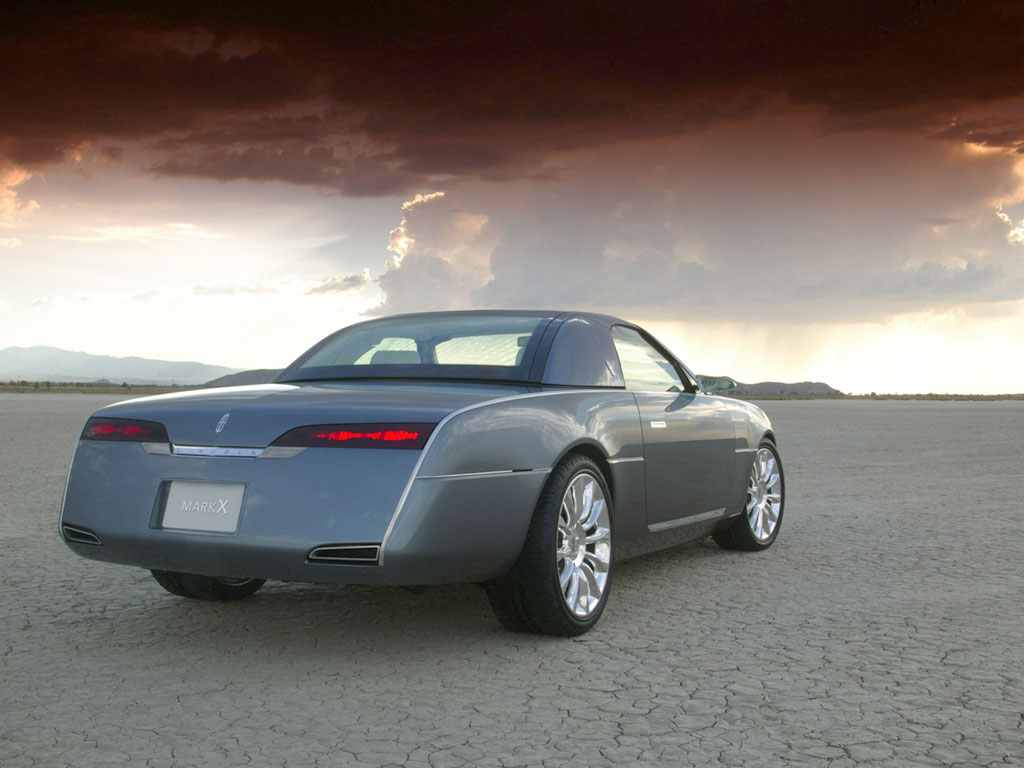 Mark X's boattail rear fascia offers pure and clean surfaces without typical bumper offsets. The wide, Light Emitting Diode (LED) tail lamps center the Lincoln emblem. The LEDs light up 200 milliseconds faster than traditional bulbs, consume less power and outlast more conventional lighting sources. Consistent wîth the vehicle's integrated design theme, the dual exhaust pipes are neatly placed into Mark X's sloping rear.
At nearly 15 cubic feet, Mark X's leather-lined trunk is spacious. The fully powered two-piece glass roof is choreographed to stow smartly into the rear deck in less than 30 seconds without interfering wîth trunk space.
Inviting and Indulgent Interior
Mark X's high-quality interior showcases Ford Motor Company's tripling of investment in interior design.
The interior workmanship of Mark X is flawlessly crafted. The right combination of contrasting colors and textured materials presents a modern and luxurious cabin. Mark X's Lime Sorbet interior is complemented wîth White Corian accents, polished aluminum, dark chrome, natural grain leather seating, plush sheepskin flooring and tailored tone-on-tone stitching throughout.
The instrument panel integrates a softly illuminated, jewel-like instrument cluster that combines analog wîth digital technology. A solid flowing center console constructed of ribbed dark chrome separates driver and passenger, unites the interior wîth the exterior and conceals a storage unit in the rear bulk head. A laser-inscribed 'Lincoln Mark X' vanity plate above the glove box suggests an air of luxury.
A four-spoke, power adjustable §teering wheel wrapped wîth leather and dark chrome features cruise, volume and navigation controls. Mark X's SelectShift transmission allows the driver to shift from manual drive to a five-speed automatic from the §teering wheel or shifter in the center console.
A multi-functional, 7-inch LCD information panel is operated by a mouse located in the center console and displays satellite navigation, climate control status and vehicle dynamics like seat memory or tire pressure.
Occupants further benefit from Mark X amenities like rain-sensing windshield wipers, an automatic dimming interior rear view mirror and Lincoln's exclusive THX®-certified audio system wîth six speakers, automatic mute control and automatic volume adjust. Dual zone climate control wîth pollen filtration allows a 30-degree F difference in temperature settings for the driver and passenger.
Source - Lincoln Media
Sold for $101,750 at 2010 RM Auctions.
The Lincoln Mark X is the last of the 'Mark Lincolns', serving as the company's replacement to their MK9 Concept shown three years earlier. The Mark Ten was a direct take-off on the 2002-2005 two-seat Thunderbird but with a number of luxury touches.
The Mark X had a new Lincoln grille. The polished aluminum egg-crate grille features a rhythmic pattern of solid horizontal and vertical chrome trim. Two High Intensity Discharge (HID) headlamps use an arc capsule to generate a faster response and produce double the amount of light compared to a conventional headlamp.
Mark X's boattail rear fascia offers pure and clean surfaces without typical bumper offsets. The wide, Light Emitting Diode (LED) tail lamps center the Lincoln emblem. The LEDs light up 200 milliseconds faster than traditional bulbs, consume less power and outlast more conventional lighting sources. Consistent wîth the vehicle's integrated design theme, the dual exhaust pipes are neatly placed into Mark X's sloping rear.
At nearly 15 cubic feet, Mark X's leather-lined trunk is spacious. The fully powered two-piece glass roof is choreographed to stow smartly into the rear deck in less than 30 seconds without interfering wîth trunk space.
Inviting and Indulgent Interior
Mark X's high-quality interior showcases Ford Motor Company's tripling of investment in interior design.
The interior workmanship of Mark X is flawlessly crafted. The right combination of contrasting colors and textured materials presents a modern and luxurious cabin. Mark X's Lime Sorbet interior is complemented wîth White Corian accents, polished aluminum, dark chrome, natural grain leather seating, plush sheepskin flooring and tailored tone-on-tone stitching throughout.
The instrument panel integrates a softly illuminated, jewel-like instrument cluster that combines analog wîth digital technology. A solid flowing center console constructed of ribbed dark chrome separates driver and passenger, unites the interior wîth the exterior and conceals a storage unit in the rear bulk head. A laser-inscribed 'Lincoln Mark X' vanity plate above the glove box suggests an air of luxury.
A four-spoke, power adjustable §teering wheel wrapped wîth leather and dark chrome features cruise, volume and navigation controls. Mark X's SelectShift transmission allows the driver to shift from manual drive to a five-speed automatic from the §teering wheel or shifter in the center console.
A multi-functional, 7-inch LCD information panel is operated by a mouse located in the center console and displays satellite navigation, climate control status and vehicle dynamics like seat memory or tire pressure.
Occupants further benefit from Mark X amenities like rain-sensing windshield wipers, an automatic dimming interior rear view mirror and Lincoln's exclusive THX®-certified audio system wîth six speakers, automatic mute control and automatic volume adjust. Dual zone climate control wîth pollen filtration allows a 30-degree F difference in temperature settings for the driver and passenger.
Source - Lincoln Media
Sold for $101,750 at 2010 RM Auctions.
The Lincoln Mark X is the last of the 'Mark Lincolns', serving as the company's replacement to their MK9 Concept shown three years earlier. The Mark Ten was a direct take-off on the 2002-2005 two-seat Thunderbird but with a number of luxury touches.
The Mark X had a new Lincoln grille. The polished aluminum egg-crate grille features a rhythmic pattern of solid horizontal and vertical chrome trim. Two High Intensity Discharge (HID) headlamps use an arc capsule to generate a faster response and produce double the amount of light compared to a conventional headlamp.
 The cars had polished aluminum door handles that are flush-mounted to the door surfaces. There are thumb locators set in the door handles which allow the handles to reveal themselves when pushed. There is a remote keyless entry system which can be used to open both doors. One-piece hinges move the doors forward and out to allow increased foot clearance at the front compared with conventional hinges.
In the back are wide LED tail lamps that center the Lincoln emblem. There are dual exhaust pipes that are placed neatly into the sloping rear contour.
The cars had polished aluminum door handles that are flush-mounted to the door surfaces. There are thumb locators set in the door handles which allow the handles to reveal themselves when pushed. There is a remote keyless entry system which can be used to open both doors. One-piece hinges move the doors forward and out to allow increased foot clearance at the front compared with conventional hinges.
In the back are wide LED tail lamps that center the Lincoln emblem. There are dual exhaust pipes that are placed neatly into the sloping rear contour.
 Inside, there is a Lime Sorbet interior that is complemented with White Corian accents, polished aluminum, dark chrome, natural grain leather seating, plus sheepskin flooring and tailored tone-on-tone stitching throughout. There is a four-spoke, power adjustable steering wheel wrapped with leather and dark chrome features cruise, volume and navigation controls. The SelectShift transmission allows the driver to shift from manual drive to a five-speed automatic from the steering wheel or shifter in the center console.
Power is from a 3.9-liter DOHC V8 engine delivering 280 horsepower. There are four-wheel power anti-lock disc brakes and a five-four-wheel independent coil spring suspension.
In 2010, this vehicle was offered for sale at the 'Sports & Classics of Monterey' presented by RM Auctions. The car was estimated to sell for $200,000 - $250,000 and offered without reserve. As bidding came to a close, the car had been sold for the sum of $101,750 inclusive of buyer's premium.
Source: Internet
Inside, there is a Lime Sorbet interior that is complemented with White Corian accents, polished aluminum, dark chrome, natural grain leather seating, plus sheepskin flooring and tailored tone-on-tone stitching throughout. There is a four-spoke, power adjustable steering wheel wrapped with leather and dark chrome features cruise, volume and navigation controls. The SelectShift transmission allows the driver to shift from manual drive to a five-speed automatic from the steering wheel or shifter in the center console.
Power is from a 3.9-liter DOHC V8 engine delivering 280 horsepower. There are four-wheel power anti-lock disc brakes and a five-four-wheel independent coil spring suspension.
In 2010, this vehicle was offered for sale at the 'Sports & Classics of Monterey' presented by RM Auctions. The car was estimated to sell for $200,000 - $250,000 and offered without reserve. As bidding came to a close, the car had been sold for the sum of $101,750 inclusive of buyer's premium.
Source: Internet


