Thursday, May 2, 2013

Lincoln Celebrates It's Past And Future

Lincoln at Los Angeles Auto Show Press Days: Celebration of Its Past and Future As Brand Rolls Out Its Reinvention

Lincoln-at-Los-Angeles-Auto-Show-Press-Days-Celebration-of-Its-Past-and-Future-As-Brand-Rolls-Out-Its-Reinvention * The brand pays tribute to its heritage today, displaying seven of the most influential Lincoln designs

* Thursday sees a display full of the all-new MKZ premium midsize sedan and MKZ Hybrid, the future of Lincoln, on the Lincoln stand

* Lincoln launches on Tumblr http://lincolnnow.tumblr.com beginning with the visually stunning classic

Lincolns shown on the stand and select images from archives. Continues with an all-new collection of photographs by photographers Jamie Beck and Kevin Burg

The reinvention of Lincoln is fully under way with the launch of the all-new MKZ. Beautiful design, warm, personal and surprising, Lincoln will transform before media's eyes today with seven iconic Lincolns of the past possessing the stand. On Thursday it will turn to all MKZs, signaling the change. 

Lincoln's Elegant Heritage

Lincoln-at-Los-Angeles-Auto-Show-Press-Days-Celebration-of-Its-Past-and-Future-As-Brand-Rolls-Out-Its-Reinvention Since 1922, the year Edsel Ford signed the agreement purchasing the Lincoln Motor Company from its founder Henry Leland, the hallmark of Lincoln has been its elegant simplicity. For Edsel, the key to revitalizing Lincoln was styling. His vision for design was that every line, contour and angle should have intent. The pure sensitivity of a line is at the heart of Lincoln's heritage – carried into the present moment of Lincoln's reinvention with the MKZ premium midsize sedan and MKZ Hybrid. 

The seven classic Lincolns on display today are:1929 Lincoln L Dietrich Convertible Coupe:

During this era, Lincoln was known as the Lincoln Motor Company. The greyhound mascot atop the radiator, which was produced by the famed silversmith Gorham, was chosen by Edsel Ford to symbolize grace, elegance and speed. Only 75 examples of this Dietrich-bodied car were produced in a two-year run, carrying a base price of $6,200. Noted for its quiet operation, the engine is an L-head V8 displacing 385 cubic inches and producing 90 horsepower at 2,800 rpm. Owner: Thomas Hartman, Rancho Palos Verdes 

1932 Lincoln KB LeBaron Convertible Roadster:

The celebrated KB model debuted in 1932, introducing V12 power and heightened style from Lincoln. In addition to offering nine standard and 14 factory custom models, Edsel Ford invited numerous custom coachbuilders to work their magic with the new KB. Brunn, Dietrich, LeBaron, Judkins and Willoughby were prominent among them. This LeBaron Convertible Roadster was priced at $4,600, making it the entry-level semi-custom model in Lincoln's book. The 448-cubic-inch engine produces 150 horsepower at 3,400 rpm and weighs 1,070 pounds. Owner: Thomas Hartman, Rancho Palos Verdes 

1937 Lincoln Derham Sport Sedan:

Built on the Model K chassis with a 150-horsepower 414-cubic-inch V12 engine, this one-of-a-kind design demonstrates the maturing of automotive streamlining in the 1930s. Its inverted teardrop headlights, pontoon fenders, fastback roof, and unique molding result in a truly formidable appearance. In 1937, the Derham Coach Company risked building this sport sedan on speculation. Price and the Great Depression kept it unsold until 1938 when Thomas Morris of New York City purchased this unique model. From 1947 through 1977, the car moved among owners in Nebraska, Iowa and Minnesota. After it sat in a barn for 20 years, Ed Burchman purchased the car in 1977. Beginning in 2000, he undertook the restoration of every component from the five-foot muffler to the sliding sunroof. His 9,000 hours of work were rewarded by a first-in-class win at the 2004 Pebble Beach Concours d'Elegance. Owner: Edmund Burchman, Rossmoor 

1937 Lincoln-Zephyr Coupe-Sedan:

Introduced in 1936 under the guidance of Edsel Ford, the Lincoln-Zephyr was the first commercially successful aerodynamic car. The Chrysler and DeSoto Airflows debuted in 1934, but were not broadly accepted. In contrast, the Zephyr family grew to 85,640 cars by 1939. Of this number, only 5 percent were Coupe-Sedans. Amazingly, records today show that only fourteen 1937 Coupe-Sedans still exist, and the car displayed here is surely the best example. An enduring Lincoln design element is its distinctive split grille, executed to recall the bow wave of a boat gliding through water. With headlamps faired into the fenders and long side windows that curve to match the sweeping bodylines, the car's inherent streamlining captured the public's imagination. Powered by a 267-cubic-inch V12 producing 110 horsepower, the Zephyr was acclaimed for outstanding highway manners, appropriate to a car named after the Burlington Zephyr streamlined train of the era. Owner: David Caparone, Paso Robles 

1940 Lincoln Continental Cabriolet

Edsel Ford returned from Europe in 1938 inspired to have a new car that was 'strictly continental' in its design. He chose designer E.T. 'Bob' Gregorie to lead the development of this car that was initially to be a one-off for Edsel to drive on vacation in Florida. Upon seeing the enthusiastic reception from his friends, Edsel chose to put it into production. The result was the legendary Continental, acclaimed by architect Frank Lloyd Wright to be 'the most beautiful car in the world' and, in 1951, chosen by the Museum of Modern Art in New York City as one of eight cars to be exhibited for 'excellence as works of art.' With the end of the K-Series Lincolns in 1939, the Continental continued Lincoln's V12 heritage with a 292-cubic-inch engine producing 120 horsepower. As production commenced, Edsel Ford owned the 20th Continental produced. The car displayed here is No. 24, shipped on Jan. 4, 1940. George Gehrig, cousin of baseball legend Lou Gehrig, owned it for many years. Owner: Elliott Jones, Huntington Beach 

1956 Continental Mark II:

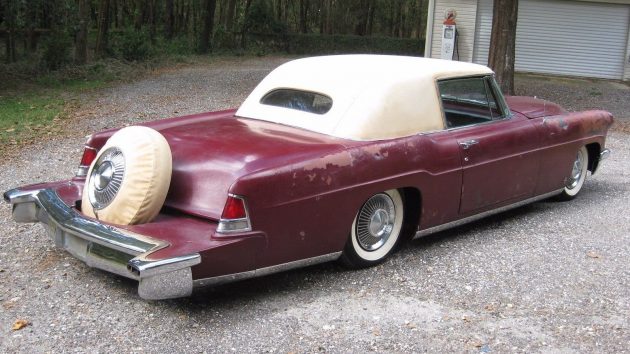
Widely acclaimed as a milestone in American automotive design, the Continental Mark II was created under the direction of Edsel Ford's son, William Clay Ford. The low, elongated profile did not need chrome, two-tone paint, or sharp styling cues to accentuate its beauty. The long hood concealed a massive 368-cubic-inch engine that produced 285 horsepower. Mounted on the hood is the four-pointed star that later became Lincoln's emblem. Continentals were hand-made. The paint was applied multiple times, sanded, double lacquered and polished. The goal was to create the most luxurious, carefully crafted production car in America. Famous owners included Frank Sinatra, Elvis Presley, Dwight Eisenhower, Barry Goldwater, Howard Johnson and Nelson Rockefeller. This example was built especially for Elizabeth Taylor with bespoke paint and interior that matched the color of her eyes. Owner: Robert and Nancy Ratinoff, Sherman Oaks 

1961 Lincoln Continental Sedan:

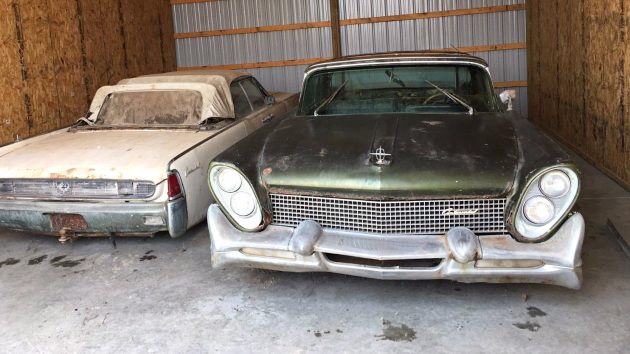
Continuing Lincoln's tradition of restrained elegance, the 1961 Continental introduced the unique center-opening doors and chrome-accented upper shoulder line that established a signature look for Lincoln and remains one of the most enduring designs of all time, a complete original. The 1961 Continental was honored by the Industrial Design Institute with its coveted bronze medallion. The chiseled profile was the work of seven designers: Eugene Bordinat, Don DeLaRossa, Elwood Engle, Gale Halderman, John Najjar, Robert M. Thomas and George Walker. Powered by a 430-cubic-inch V8 producing 300 horsepower, the Lincoln Continental delivered driving pleasure commensurate with its breakthrough design. This car has been in San Diego since new, has been driven only 70,000 miles and is acclaimed as a Lincoln Continental Owners Club Senior Car. Owner: Joe Finkbiner, San Diego 

All-New Lincoln MKZ

The all-new MKZ is the new face of Lincoln, representing a significant milestone in the brand's ongoing reinvention. This is the future of Lincoln in style and substance.

•MKZ is the first of four new distinctively Lincoln vehicles to be introduced in the next four years

•Each will be an entry into a major volume segment of the overall premium market and collectively will provide Lincoln with coverage in more than 80 percent of the market

•The new MKZ, like all new Lincoln vehicles, will feature a driving experience that is refined yet engaging. Innovative use of new technologies incorporated in standard Lincoln Drive Control creates the best of both worlds – scintillating dynamic qualities and performance with superb comfort

•The all-new MKZ Hybrid is an outstanding example of the new Lincoln – at 45 mpg city, highway and combined, it delivers more miles per gallon than any other luxury vehicle sold in America

•The visually and technically stunning retractable panoramic roof becomes a Lincoln signature, offering a 15.2-square-foot glass panel and one of the largest rooftop openings available on any modern sedan

•Push-button shift is a unique execution that replaces the traditional mechanical transmission shift lever with a contemporary five-button interface and dramatically opens up the center console

•Lincoln-exclusive THX® II Certified Audio System, with 700 watts, 14 channels and 14 speakers available

Source: Internet

1964 Lincoln Continental

Lyndon B. Johnson's Lincoln Continental to be Auctioned in Dallas

Lyndon-B-Johnsons-Lincoln-Continental-to-be-Auctioned-in-Dallas A 1964 Lincoln Continental formerly owned by President Lyndon B. Johnson will be sold during the 40th annual Leake Collector Car Show & Auction in Dallas, November 16-18. The white Lincoln features an automatic transmission, 430 CI and a 320 HP V-8 engine. Often referred to as one of his presidential toys, President Johnson used this vehicle on his ranch where he retreated to relax. Many times he was spotted inspecting his ranch with the top down while the Secret Service trailed him. Documentation is available to confirm the previous ownership. It is currently under the ownership of the LBJ Foundation.

The Leake Collector Car Show and Auction will take place in Dallas Market Hall. Admission is $15 for adults and $10 for seniors and $7 for children. Doors open at 9am daily and the auction will begin at noon on Friday, 10am on Saturday and 11am Sunday.

The event will feature 550 vehicles including Cadillacs, Corvettes, Camaros, Shelbys, Thunderbirds, hot rods, customs and other vintage, collector, muscle and specialty cars. Car buyers, sellers and enthusiasts from a multi-state area are expected to attend the auction. Leake Auction Company was established in 1972 as one of the first car auctions in the country. More than 40 years later the auction company has sold more than 34,000 cars. Leake Auction Company currently operates auctions in Tulsa, Oklahoma City, Dallas and San Antonio. Visit them online at www.leakecar.com or at 800.722.9942.

Source: Internet

Wednesday, May 1, 2013

Lincoln History

1917 The Lincoln Motor Company is founded in Detroit by Henry Leland to build Liberty aircraft engines for the First World War.

1920 The first Lincoln car, the 'L' series, is introduced.

1922 The Ford Motor Company acquires Lincoln at the urging of Edsel Ford.

1936 The Lincoln Zephyr, the first successful streamlined car, is introduced.

1940 Zephyr becomes the basis for the original Lincoln Continental - a car Frank Lloyd Wright declared to be the most beautiful in the world. It also was the first vehicle honored for design excellence by the Museum of Modern Art in New York.

1956 The Continental Mark II, which was developed under the direction of Edsel Ford's son, William Clay Ford, establishes the classic hood, cabin and deck proportions of the modern luxury coupe.

1961 A new Continental is introduced. It remains one of the most enduring designs of all time. Its sheer body surfaces, unique center-opening doors and chrome accented upper shoulder line established a signature look for Lincoln that was totally unique.

1968 The Lincoln Mark III, the first of a new generation of Mark-series coupes, is introduced.
1970 The Continental is redesigned. The new car is built on a 127-inch wheelbase frame and offers V-8 engines that range in size up to 460 cubic inches (7.5-liters). Throughout the 1970s, Continental is offered with a Town Car package that included special leather seats and wood appliqués in the cabin.

1981 The Lincoln Town Car is introduced as its own line. The new car is built on a 117.3-inch wheelbase and is powered by a 5.0-liter V-8 engine.

1990 The second-generation Town Car is introduced. The car is powered by the venerable 5.0-liter V-8. The wheelbase is unchanged. For the first time, Town Car is offered with dual front air bags, speed-sensitive power steering and rear air spring suspension. Anti-lock brakes are optional.

1998 The third-generation Town Car is introduced. The wheelbase is slightly longer than the previous car, but the exterior design is more contemporary. The engine is a modern overhead cam 4.6-liter V-8. A Watt's linkage rear suspension and other chassis refinements are adopted.

The Navigator is introduced. As the first American luxury sport-utility vehicle, it became an overnight success. Fully 60 percent of Navigator customers are new to the Lincoln brand.

1998 - 2001 Lincoln Mercury relocates its headquarters from Detroit to Irvine, Calif., in the heart of the country's largest market for luxury vehicles. Its permanent headquarters opens in 2001.

1999 The Lincoln LS is introduced and is named Motor Trend's 2000 'Car of the Year.' Fully 70 percent of LS customers are new to the Lincoln brand.

2000 Dedicated Lincoln design, product development, purchasing, finance and manufacturing organizations are established.

2001 The Lincoln MK 9 concept is unveiled. Together with the Continental concept, it points to the design direction of future Lincoln vehicles.

The 2002 Lincoln Blackwood is launched. It faithfully recreates the 1998 concept vehicle.

The 2003 Lincoln Town Car is unveiled by Ford Motor Company President and Chief Operating Officer Nick Scheele at the Henry Ford Estate in Dearborn.

2002 The 2003 Lincoln Navigator is revealed at the Los Angeles Auto Show and the all-new 2003 Lincoln Aviator is revealed at the New York Auto Show. The new Navigator, Aviator and Town Car will be joined by a new 2003 LS later in the year.

The Lincoln Continental concept is introduced at the Los Angeles Auto Show. It embodies elegance, simplicity and restraint.

Lincoln emblemSource: Lincoln

Monday, April 8, 2013

17 Things Car Salesmen Don't Want You To Know

1. Your Smartphone Is Your Most Powerful Weapon

Years ago, car dealerships and their sales force held all the cards, and buyers held very few. But that has changed completely. Now, with information and sites like Edmunds.com's True Market Value (TMV), Autotrader, eBay Motors, and access to car experts in the palm of your hand, you have effectively marginalized the car salesman. You know what they paid for the car, what their mark up is, when they bought it, what their bottom line is, everything. You can, in essence, make haggling a thing of the past. However, if you leave your phone at home, then you better have a terrific memory and be able stick by your guns. Proof is power.

2. You Can Win the Game Before Setting Foot on a Lot

The Internet has done wonders for the humble consumer. With it, you can email 20 dealers within a 50 mile radius, tell them what you're looking for, and ask them to send you back a quote. From those quotes, pick the lowest couple and take those to any dealership you want. They'll usually be forced to match it, destroying whatever profit margin they were hoping for. And before you feel too bad, the dealerships get massive bonuses by hitting certain sales targets. They can give you the car at cost and still walk away with a nice pile of cash.

3. Be Wary of Salesmen Who Leave to Let You "Talk it Over"

I actually had this happen to a friend of mine, and I laughed when I saw it come up in the comments.
If you somehow manage to get stuck in the salesman's office haggling over numbers, he may receive a call and leave to let you and your partner "talk it over." This is an old trick that some dealers use to listen in on your conversation, letting them know instantly just what your bottom line is. If it happens, whispers or text messages to each other may be a good way to combat eaves dropping.

4. You Are Being Screwed on Your Trade In

If the car you're trading in is in good condition, you won't be getting a good deal on it.

Sure, you're armed with the Kelley Blue Book (KBB) trade-in price and resale price, but those numbers are hogwash. Dealers use something called the National Automobile Dealers Association (NADA) database, which gives them a much more realistic idea of what they can get for your trade. Some of the salesmen reported KBB values that undervalued cars by $5,000 or more. Your best bet is to get a copy of the NADA value for your car. Or, if you can, sell it privately instead.

5. There Are Mark-Ups Aplenty on the Sales Stickers

Dealerships refer to them as "bumper stickers" because that's where they bump up the price of the car. Little extras like VIN etching, fabric protectants, sealants, and other "must have" additions can all be done by you at home, usually for way less. Ask to see the original invoice, and compare it to the bumper sticker. That's what you really want to look at. If they refuse, go elsewhere. And even then, the invoice doesn't tell the whole story. See fear number 10, below.

6. You Have the Power to Control the Sale

Those two things below your waist, called legs, are a sales weapon.

If at any time you don't feel good about the sale, you can walk away. Often, the salesman will hit you with a much lower offer when you get up out of your seat and tell them you've decided against it. Remember, they can't do the deal without you, and you are always in a position to say, "NO." You lose nothing but a few hours of your time; they lose a commission and a bonus.

7. The Dealership's Extended Warranties Are for Suckers

Even if you get the salesman to agree to a price that is basically what the dealership paid for the car, you still have to go to that back room; the room where the deal is sealed.

Whether you lease, finance it, or plonk down a wad of cash, they'll try to push every single option they can on you. That includes an extended warranty that you can buy way cheaper from someone else. The dealership makes a lot of money on these service contracts. Don't fall for this. As one of the salesmen pointed out, the finance manager is actually a salesman, too. They're going to do whatever they can to squeeze more money out of you before you leave.

8. The Four Square Is Designed to Manipulate You

There have been many, many negative articles written on the four square worksheet, and with good reason.
The four square sheet is a way for the salesman to "play" with the numbers and make you think you're getting a great deal. Usually, the first time they come to the table with it, the numbers are so insulting you'll want to walk out. That's intentional. They can't look like miracle workers if they give you a reasonable price. And then the numbers game is played out, but the price of the car rarely goes down more than a few bucks. However, there's a better way to show just how this is used to trap you into a price you really don't want to pay. Read this article, written by car salesmen FOR car salesmen. It's quite an eye opener. And as one redditor advised, tell them not to bring out the four square worksheet or you're leaving. That puts you in a position of power, and they'll know you're no sucker.

9. Salesmen Have Ways to Mess With Your Head

You drive into a dealership with your trade in. The salesman looks it over, nodding, giving the usual chit chat. But he'll ask things like "does it have power steering?" or "does it have a sunroof?" He already knows the answer. He knows the spec of the car and what it's worth. He just wants you to say NO a lot. And by saying no over and over, you start to devalue your trade in, and expect less for it. Get the NADA value, and whatever he asks you, just keep that number in your head.

Another method is taking the keys from your trade in before you sit down at the negotiation table. It's a lot harder to walk away when you don't have your keys on you. They know this, and will often give the keys to a third party, like their sales manager. Now, they have to hunt him down before you can get your keys, and that will take a while. Long enough for them to have another crack at you.

10. Never Offer to Pay Invoice for Your Vehicle

You hear people say it all the time. "I'm paying invoice for that car, not a cent more." Well, go ahead, it's better than paying the MSRP.(Manufacture Suggested Retail Price) But very few people will pay MSRP anyway. And the invoice price of the car is not telling you the whole story. The dealership gets dealer holdbacks, customer rebates, and factory-to-dealer incentives. This is money they can take off the sales price and offer to you, but they won't just hand it over without a fight. These incentives are usually not even advertised, but they can save you thousands.

11. Never Talk About Your Down Payment Up Front

The salesman will ask early on "how much are you going to put down?" It seems like a reasonable question, but you're giving up a bargaining chip way too early. One story talks about an old man who had $10,000 to put down on a truck, and the dealership basically upped the price of the truck to offset that down payment. In effect, the old man threw it away. Wait until you know the "Out the Door" price of the vehicle before you talk about a down payment.

12. Monthly Payments Are Deceptive

You should have a figure in your head of what you can afford to pay for the car, NOT for the monthly payment. The reason is simple. A dealership can mess with the figures, the length of the loan, and the APR, and reduce your monthly payment, but you could end up paying even more for the car than you first agreed to. Look at the final cost, and only the final cost. If your monthly price for that is too high, you're spending more than you want to.

13. Hail-Damaged "Bargains" Are Marked Way Too High

If the cars at the dealership get hail damage, they're going to mark them down and sell them to you at a discount. Great, a bargain, if you don't mind the dents. But the dealership has insurance policies on the cars on the lot, and they've already been reimbursed for that damage. The dealership is not passing all of that on to you, so you're generating some nice profit for them.

14. Non-Factory After-Market Options Are a Huge Rip Off

Many dealers will add "extras" to the car that cost them pennies on the dollar. Pin striping, rims, spoilers, stereo systems, alarms, you name it, they'll throw it in.

Negotiate from the invoice price, not the padded sticker price. You don't need to pay $250 for a few bucks worth of pin striping. You don't need floor mats that cost $200. If it's non-factory, ask for it to be taken off. All of it. Do it yourself, or get a trusted mechanic to do it. And you can also get your tinting and clear bras done elsewhere for around HALF the price the dealership will charge.

15. You Get the Best Deal From the Internet Salesman

This was the one point that kept coming up over and over.

When you go through the Internet sales department, the dealership already knows that you know certain things. They know you're a savvy shopper, that you're looking around, and that you're comparing prices. The Internet salesman will start at a much lower price than the salesman on the lot. In short — don't walk onto the lot unless you're going in to meet the salesman you've been dealing with online.

16. Get Your Own Financing Before You Buy

You can negotiate way better terms in advance, with a credit union or another financial institution. Don't leave it up to the dealership; get this all pre-approved before you walk in.

17. You Can Cancel Those Service Contracts Within 30 Days

So you get caught up in the financial meltdown and agree to pay for a lot of extras, including the extended warranty, tire protection, and so on. Well, you are not stuck with them. You can cancel within 30 days and get your money back. You can also use this to your advantage. Agree to the service contracts if you get money taken off the price of the car. The dealership makes way more from the service plans than the car anyway, so they'll be happy to make the deal. When you cancel, you're in the money.

Source: Wisebread


Friday, March 1, 2013

2007 Lincoln MKR

The most popular car in the Lincoln exhibit was the head-turning MKR prototype that introduced a new design language of “elegant simplicity” on a 4-door coupe, and debuted the all-new, fuel-saving TwinForce engine. Developed to perform comparable or better than V-8 engines, the 3.5-liter gasoline twin-turbocharged direct-injection V-6 deliverd 415 horsepower and 400 lb.-ft. of torque on renewable E-85 ethanol. This one-of-a-kind automobile sat on chrome aluminum wheels wrapped in unique Michelin tires that featured the Lincoln star in its treads. Chrome-trimmed gauges illuminated with Ice Blue lighting, and the concave spoke steering wheel included retractable paddle shifters. Visually, the MKR had clean, uncluttered surfaces, with a significant C-pillar that smoothly transitioned into the cantilevered roof. The double-wing grille was inspired by the 1941 Lincoln Continental Cabriolet.


Source: Internet

Tuesday, February 26, 2013

2004 Lincoln Mark-X

Lincoln’s first two-door convertible concept with a power-folding, retractable, glass-roofed hardtop is the Mark X. Pronounced "Mark Ten," the two-seat luxury convertible roadster is based on the rear-wheel-drive Ford Thunderbird architecture, and features a 280 horsepower, 3.9-liter, 4-valve DOHC V-8 aluminum engine mated to a five-speed automatic transmission. Mark X’s SelectShift transmission allows the driver to shift from manual drive to a five-speed automatic from the steering wheel or shifter in the center console. A multi-functional, 7-inch LCD information panel is operated by a mouse located in the center console and displays satellite navigation, climate control status and vehicle dynamics like seat memory or tire pressure.

2004 Lincoln Aviator

Lincoln has big plans for the all-new, redesigned Aviator. As the first car-based SUV to come from Lincoln, the next-generation Aviator promises a more car-like ride. Under the Aviator’s hood lies a 3.5-liter V-6 engine mated to a six-speed automatic transmission and a full-time all-wheel-drive system that utilizes hill descent control. Incorporating design cues from Lincolns of old, the Aviator will feature a bright metal strip, which begins at the grille and outlines the vehicle’s structure.